Views: 0 Author: Site Editor Publish Time: 2026-06-03 Origin: Site


Choosing a Dining Table represents a high-stakes design decision. You are making a high-traffic, long-term investment. This single furniture piece ultimately dictates the flow, comfort, and function of your home. Unfortunately, buyers often focus purely on aesthetics when browsing showrooms. They easily overlook hard physical constraints. Critical factors like base engineering, chair clearance, and material upkeep get ignored until the piece arrives. A beautiful design quickly becomes an everyday obstacle if you cannot slide a chair out comfortably.
To solve this, we provide a definitive, mathematically sound evaluation framework. We will help you size, select, and specify the exact Table you need. You will learn how to seamlessly match hard spatial limits with your actual lifestyle realities. Read on to master the math and mechanics behind the perfect dining room setup.
Measure strictly: Your room's dimensions minus 84 inches equals your maximum practical table size.
Factor in the base: Thick corner legs reduce seating capacity; pedestal bases maximize legroom.
Size for the everyday: Buy for your permanent household, using extension leaves or benches to scale up for holidays.
Match material to lifestyle: Assess materials based on durability and maintenance (e.g., glass shows fingerprints; solid wood can be refinished).
Mind the vertical gap: Ensure 10–12 inches of clearance between the chair seat and the table's bottom apron for ergonomic comfort.
You cannot cheat the physical dimensions of your room. Before browsing different styles, you must calculate your absolute spatial limits. Doing so prevents costly layout mistakes.
Reading measurements on paper often deceives the eye. We highly recommend the bed sheet test. Fold a large bed sheet on your floor to match your prospective table dimensions. This lets you visualize the exact physical footprint. Walk around the sheet. Notice how it impacts traffic flow to nearby doorways.
Industry professionals rely on a strict mathematical formula to avoid overcrowding. Take your room's total length and subtract 84 inches. Then, do the exact same for the width. The resulting numbers represent your maximum allowed footprint. This simple rule guarantees you retain functional walkway space.
Proper spacing determines whether your guests feel cramped or comfortable. Follow these essential clearance metrics:
Absolute Minimum: You must leave 36 inches from the table edge to the nearest wall. You also need this distance from any other furniture piece. Anything less traps seated guests.
Ideal Clearance: Aim for 42 to 48 inches if your room allows. This generous gap lets guests slide chairs out easily. It also allows hosts to walk behind seated guests comfortably during service.
Length dictates how many people you seat, but width dictates how well they eat. You should aim for a width between 36 and 42 inches. This range leaves adequate room for place settings. It also accommodates serving dishes and centerpieces easily. You must avoid anything under 30 inches. Narrower surfaces simply cannot hold plates and glassware safely across from one another.
Room size dictates the outer boundaries. Base engineering determines how many humans fit comfortably inside them. Many buyers misunderstand how table legs steal valuable seating space.
Ergonomics dictate a baseline for personal space. You must allocate a minimum of 24 inches of linear width per seated adult. This ensures elbows do not clash during meals. Oversized dining chairs require even more width. Always measure your chairs before committing to a capacity number.
The placement of a base drastically impacts real-world seating.
Four-Leg Tables: Legs positioned inward cause immediate problems. Thick, chunky legs take up massive space. For example, 8-inch farmhouse posts can cost you up to two full seats on a standard 6-foot frame. Guests simply cannot comfortably straddle a massive wooden post.
Pedestal and Trestle Bases: These designs are best for maximizing your seating capacity. They pull the support structure away from the corners. They completely eliminate the awkwardness of straddling a leg. Trestle bases work exceptionally well for long rectangular shapes.
Horizontal space matters, but vertical clearance ensures true comfort. Below is a breakdown of industry-standard heights and why they matter.
Height Category | Desktop Measurement | Ideal Chair Seat Height | Best Use Case |
|---|---|---|---|
Standard Height | 28–30 inches | 17–18 inches | Traditional dining rooms, formal dinners. |
Counter Height | 36 inches | 24–26 inches | Kitchen islands, casual prep areas. |
Bar Height | 42 inches | 28–30 inches | Game rooms, standing conversational setups. |
You must also beware of the apron trap. The apron is the wooden skirt connecting the legs just under the top. This skirt should never exceed 4 inches in thickness. Anything larger significantly restricts thigh clearance. You must always maintain 10 to 12 inches of open air between the chair seat and the underside.
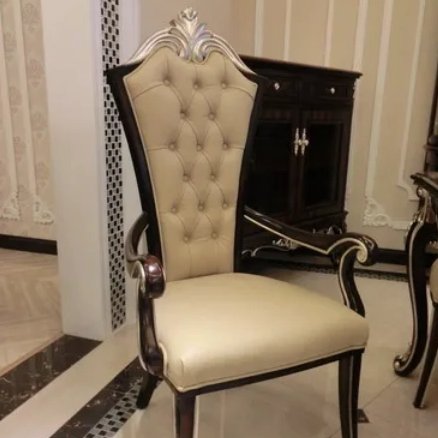
Your room's architectural shape should heavily influence your furniture selection. Forcing the wrong shape into a room disrupts visual harmony. It also ruins practical movement pathways.
These remain the most popular choice globally for a reason. They excel in long, narrow rooms. They perfectly suit households that regularly seat six or more people. Rectangular designs mirror standard room layouts naturally. They provide excellent surface area for large feasts.
Table Length | Comfortable Seating Capacity |
|---|---|
48 to 60 inches | 4 seats |
60 to 72 inches | 6 seats |
78 to 96 inches | 8+ seats |
Round shapes completely change the flow of a room. They are best for square rooms. They foster intimate, conversational dining experiences perfectly. They lack sharp corners entirely. This makes them highly kid-friendly and safe for high-traffic zones. However, there is a distinct implementation risk. Round models exceeding 60 inches in diameter create a "dead center." Reaching the middle becomes difficult. You will generally require a lazy Susan for practical serving.
Oval designs offer a brilliant compromise. They provide the raw seating volume of a rectangular shape. Yet, they visually soften the room. The rounded corners improve traffic flow around tight edges. They feel less formal than rectangles but offer more space than circles.
Square surfaces look stunning in symmetrical rooms. They work beautifully for smaller households. They are ideal for four to eight people. They offer equal distance between all diners. Like large round models, oversized squares suffer from usability issues. Any square exceeding 60 inches wide creates a massive dead center zone.
Aesthetics drive initial attraction. However, daily maintenance determines long-term satisfaction. You must evaluate materials based on your household's actual wear-and-tear reality.
Pros: Solid wood remains timeless and incredibly durable. It is completely repairable. You can sand it down and refinished it multiple times.
Risks and Features: Smooth, fully planed surfaces show dents quickly. For high-impact households, consider "skip-planed" or distressed finishes. These textured surfaces naturally hide scratches. They disguise dents much better than a flawless, polished top.
Pros: Veneer is highly cost-effective. A thin slice of real wood covers a stable core. It remains structurally stable against seasonal warping.
Risks: You cannot deeply sand veneer. The top layer is too thin. It is also prone to peeling or blistering. Prolonged exposure to moisture damages it permanently.
Pros: Glass creates a beautiful illusion of open space. It reflects light perfectly. This makes it ideal for small or dark rooms.
Risks: It demands high maintenance. You must wipe it constantly to remove fingerprints. Glass is also inherently risky for households with active toddlers.
Pros: These materials offer unmatched luxury. They provide extreme structural durability. A stone surface feels incredibly substantial.
Risks: They are overwhelmingly heavy. Moving them requires immense effort. Stone is also naturally porous. Marble requires regular chemical sealing. Without sealing, wine and acidic foods stain it instantly.
Pros: Metal delivers a striking industrial aesthetic. It is nearly indestructible. It requires zero routine maintenance.
Risks: A pure metal surface can feel cold. It often looks overly sterile for a warm dining space. It is often better utilized as a sturdy base material, paired gracefully under a wood or stone top.
Smart buyers plan for versatility. Your dining space should adapt to changing circumstances seamlessly. Buying the biggest option available is rarely the smartest move.
Many shoppers make a fundamental sizing error. They purchase a massive size for their once-a-year Thanksgiving crowd. Do not do this. You should purchase a footprint sized for your daily household count. Rely on smart extensions to scale up when needed. A massive, empty surface feels uninviting during everyday family meals.
Extensions offer the best of both worlds. However, you must choose the right mechanism.
Butterfly Leaves: These feature self-storing mechanisms built directly into the frame. They are highly convenient. You never lose track of the leaf. However, the storage housing can limit under-table clearance slightly.
Drop-In Leaves: These are independent wood panels. You manually insert them into the center gap. Warning: You must store these in a climate-controlled area. Under a guest bed works well. Never store them in a fluctuating-temperature garage. Extreme temperature shifts cause independent panels to warp over time.
Seating flexibility extends beyond the tabletop. Using a dining bench on one side offers unique advantages. It allows you to squeeze in extra kids effortlessly during a party. Furthermore, a backless bench can be tucked completely out of the way. Pushing it fully under the top instantly widens a tight walkway. This strategy works wonders in narrow dining zones.
Purchasing the right dining setup requires far more than matching paint colors. You must measure the hard physical limits of your room first. Then, you lock in the base engineering and shape that specifically suit your footprint. Finally, select a material perfectly aligned with your household's daily habits.
Do not let aesthetics blind you to ergonomics. Your next immediate step is practical. Grab a tape measure and some painter's tape. Alternatively, use a folded bed sheet. Map out a strict 36-to-48-inch clearance in your dining room today. Complete this physical test before you look at specific showroom models.
A: A 60–72 inch rectangular table comfortably seats six adults. If you prefer round or square designs, look for a 48–60 inch diameter. This assumes you are using standard dining chairs without bulky arms.
A: The industry standard height ranges from 28 to 30 inches. This specific height is designed to pair perfectly with standard dining chairs that feature an 18-inch seat height.
A: Round tables are generally much better for tight spaces. They lack sharp corners, which significantly eases traffic flow. Pairing a round top with a central pedestal base maximizes legroom in cramped rooms.
A: You need a strict absolute minimum of 36 inches. However, designers highly recommend leaving 42 to 48 inches. This larger gap allows for truly comfortable movement and easy chair pull-out.
A: The recognized industry standard is 24 inches of linear elbow room per person. Reserving this space ensures guests do not bump arms while cutting food or reaching for drinks.


